
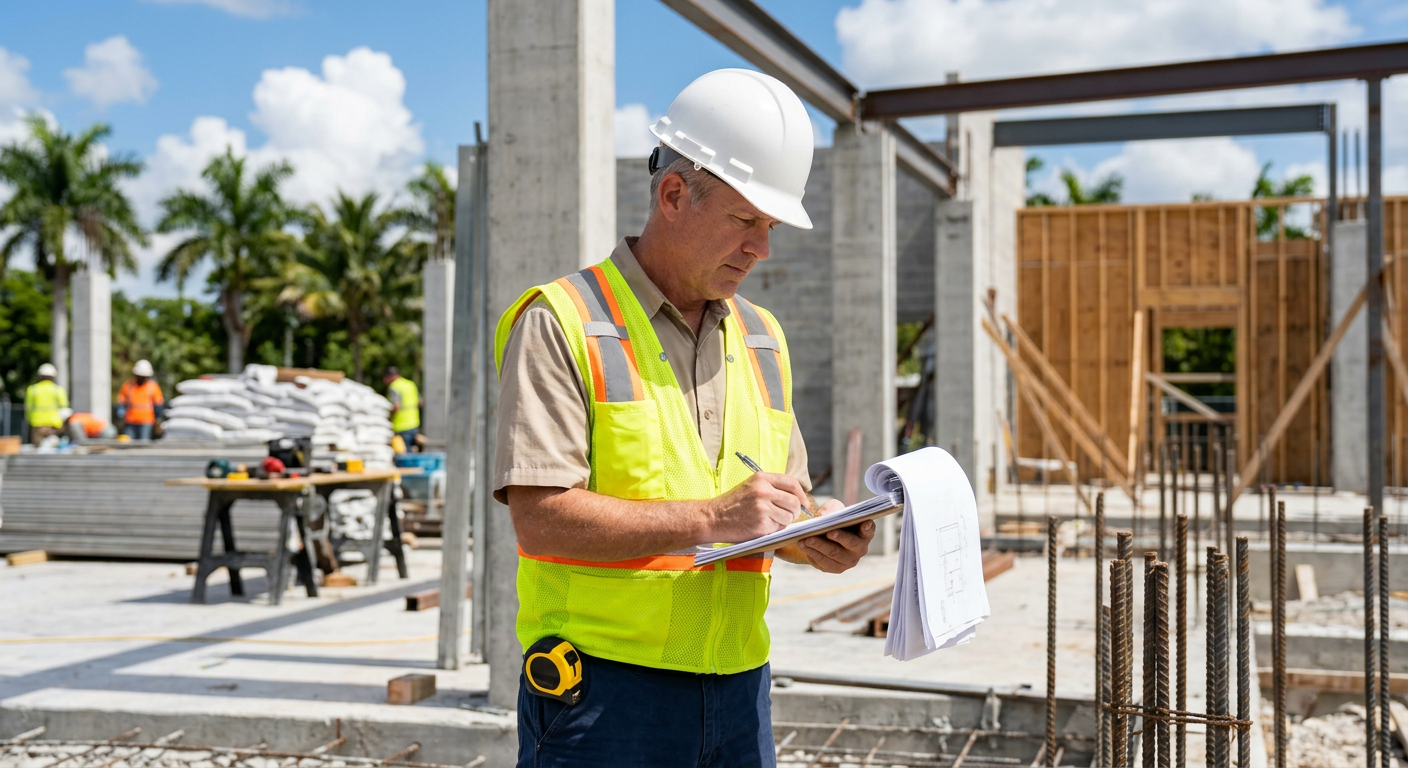
You have likely seen building inspectors on job sites, easily identified by their hard hats and clipboards. But what exactly does a building inspector do? In Florida’s busy construction industry, these professionals play a critical role in ensuring safety, compliance, and quality across every project, from single-family homes to large commercial buildings.
This article will explore the daily responsibilities of a building inspector, the skills needed to succeed, and the career path in Florida. We will also show how your construction background can give you a significant advantage.
If you are considering a move into an inspection or plans examiner role, this guide will provide the clarity you need.
At a Glance
- Building inspectors ensure construction meets Florida building codes and safety standards.
- Florida inspectors must meet requirements set by the Building Code Administrators and Inspectors Board (BCAIB).
- Candidates typically need to pass the Principles & Practices exam and applicable trade-specific exams.
- Construction experience provides valuable knowledge of building systems, methods, and code requirements.
- Inspectors check foundations, framing, system rough-ins, code compliance, and completed projects.
- Career paths include building inspector, plans examiner, senior inspector, and chief building official.
The Role of a Building Inspector
A building inspector is a certified professional authorized to verify that construction projects adhere to local and state building codes. In Florida, their authority is governed by state statutes, which outline licensing and certification requirements.
Their primary purpose is to protect public safety by ensuring buildings are constructed to be safe, durable, and legally compliant.
Inspectors can work for municipalities, counties, or private firms. They are responsible for inspecting residential, commercial, and industrial buildings to confirm they meet all safety and structural standards. Think of them as the guardians who ensure a building’s minimum safety from the ground up.
Why Building Inspection Matters
The work of a building inspector directly impacts public safety. Faulty structural work, substandard electrical systems, or poor plumbing installations can lead to dangerous hazards. By enforcing codes throughout a project’s lifecycle, inspectors prevent these issues and ensure that buildings are safe for occupants.
Typical Responsibilities
The duties of a building inspector are varied and detailed. While much of the work happens on-site, it begins long before construction starts.
Initially, an inspector or plans examiner reviews plans and specifications to ensure the project meets code requirements before a permit is issued. Once construction is underway, their on-site work includes:
- Foundation and Framing Inspections: Checking the structural base and framework of a building.
- System Rough-ins: Examining electrical, plumbing, and mechanical systems before walls are closed.
- Code Compliance Checks: Verifying that all work follows the approved plans and meets current building codes.
- Final Inspections: Conducting a thorough review of the finished project to approve it for occupancy.
Communication is a huge part of the job. Inspectors interact with contractors, architects, engineers, and property owners to explain code requirements and clarify compliance issues. They also write detailed reports, maintain logs, and may issue stop-work orders if significant violations are found.
Where Building Inspectors Operate
Inspectors split their time between the office and the field. Office work involves reviewing plans, writing reports, and coordinating with building departments. In the field, they navigate active construction zones, renovation sites, and existing properties.
The work varies greatly depending on the project. Residential inspections differ significantly from those for large commercial properties or industrial facilities.
In Florida, inspectors must also be knowledgeable about special requirements related to coastal construction, flood zones, and hurricane resistance.
Skills and Qualities of a Successful Building Inspector
Transitioning from hands-on construction to inspection requires a specific skill set. While your field experience is invaluable, you also need a deep understanding of the Florida Building Code and other regulations.
Key skills and qualities include:
- Technical Knowledge: A strong grasp of building systems, including structural, mechanical, electrical, and plumbing (MEP), is essential.
- Attention to Detail: Small oversights can lead to major problems. An inspector must be meticulous, as the safety of future occupants depends on their thoroughness.
- Communication Skills: Inspectors must clearly explain complex code requirements to various stakeholders and effectively negotiate solutions when issues arise.
- Integrity and Good Judgment: Inspectors must remain impartial and enforce codes without bias, even under pressure from project timelines.
The Career Path and Demand in Florida
For those with a background in construction trades, moving into an inspection role is a logical career progression. Your practical experience provides insight into building methods and common challenges, giving you a head start in the field.
According to recent data, the average base salary for a building inspector in Florida is approximately $69,000 per year, with experienced professionals earning over $100,000. Nationally, the median wage is around $72,120 annually.
While projections show a slight decline in demand nationwide, fast-growing states like Florida continue to have a steady need for qualified, licensed inspectors due to constant new construction and renovation projects.
This career also offers room for growth. Many inspectors advance to senior inspector, plans examiner, or chief building official roles. Others specialize in areas like electrical, plumbing, or fire-safety inspections.
For contractors, an inspection career provides a more stable, schedule-friendly path where field knowledge meets regulatory authority.
Building Inspector Licensing and How to Prepare
To become a licensed building inspector or plans examiner in Florida, you must meet the requirements set by the Florida Building Code Administrators and Inspectors Board (BCAIB). This involves passing specific examinations.
Candidates typically need to pass a “Principles & Practices” exam along with trade-specific exams, such as “Technical Building Inspector” and/or “Plans Examiner.” Preparing for these tests requires dedicated study of the Florida Building Code and related standards. This is where a structured exam-prep course becomes invaluable.
Gold Coast School of Construction’s program for becoming a Florida Building Inspector & Plans Examiner offers flexible learning options to fit your schedule. Our courses cover code review, provide extensive exam-preparation materials, and simulate the testing environment to build your confidence. Unlike most other exam prep courses out there, the Gold Coast program prepares you for all three exams.
Tips to Stand Out and Succeed
To excel in this role, continuous learning is key. Stay updated on changes to the Florida Building Code, especially amendments related to local conditions. Networking with other professionals can also open doors to new opportunities.
Your field experience is your greatest asset. The more exposure you have to real-world construction challenges, the better your judgment will be. Additionally, developing strong documentation skills will help you communicate issues clearly and keep projects moving forward.
Consider certifications in high-demand areas like energy efficiency audits, green building compliance, or advanced MEP systems to increase your value and expand your career options.
Start Your Career with Gold Coast School of Construction
If you are ready to transition from contractor to a licensed building inspector or plans examiner, a structured course can simplify the process. Gold Coast’s Building Inspector & Plans Examiner course is designed to guide you through every step.
With flexible scheduling, robust exam prep, and expert instruction, we provide the tools you need to pass your exams and launFloridah a successful new career. A license not only qualifies you for public-sector jobs but also opens opportunities in private consulting with third-party providers.
Take the next step in your professional journey and connect with Gold Coast today!

Frequently Asked Questions
What does a building inspector do in Florida?
A building inspector is a certified professional authorized to verify that construction projects adhere to local and state building codes. Their primary purpose is to protect public safety by ensuring buildings are constructed to be safe, durable, and legally compliant.
What types of inspections does a building inspector perform?
Once construction is underway, their on-site work includes foundation and framing inspections, system rough-ins, code compliance checks, and final inspections.
Where do building inspectors work?
Inspectors can work for municipalities, counties, or private firms. Inspectors split their time between the office and the field.
What skills are important for a successful building inspector?
Key skills and qualities include technical knowledge, attention to detail, communication skills, and integrity and good judgment. While your field experience is invaluable, you also need a deep understanding of the Florida Building Code and other regulations.
What exams do Florida building inspector or plans examiner candidates typically need to pass?
Candidates typically need to pass a “Principles & Practices” exam along with trade-specific exams, such as “Technical Building Inspector” and/or “Plans Examiner.”
Can construction experience help you become a building inspector?
For those with a background in construction trades, moving into an inspection role is a logical career progression. Your practical experience provides insight into building methods and common challenges, giving you a head start in the field.
What career growth opportunities are available to building inspectors?
Many inspectors advance to senior inspector, plans examiner, or chief building official roles. Others specialize in areas like electrical, plumbing, or fire-safety inspections.
How can Gold Coast School of Construction help candidates prepare?
Gold Coast School of Construction’s program for becoming a Florida Building Inspector & Plans Examiner offers flexible learning options to fit your schedule. Our courses cover code review, provide extensive exam-preparation materials, and simulate the testing environment to build your confidence. Unlike most other exam prep courses out there, the Gold Coast program prepares you for all three exams.

Interested in becoming a Florida real estate agent?
Connect with an enrollment advisor today.
By clicking “Submit”, you authorize Gold Coast Schools (“us”) to deliver, or cause to be delivered, to you at the phone number you provided above with telemarketing, promotional, informational, and transactional calls and/or text messages using an automatic telephone dialing system or prerecorded/artificial voice. Message and data rates may apply. Text message and call frequency varies. You may opt-out of receiving texts at any time by replying “STOP”. You may opt out of receiving calls/texts by contacting us at info@goldcoastschools.com and letting us know you want to opt-out. Reply “HELP” to a text for assistance. Calls and texts may be recorded for quality and training purposes. Your consent is not required to purchase any goods or services from us.
By clicking “Submit”, you also agree to receive commercial, promotional, and transactional emails from us at the email address you provided above You can opt out of receiving future emails at any time using the unsubscribe link in our electronic messages or by contacting us at info@goldcoastschools.com and letting us know you want to opt-out. See our Terms and Conditions and Privacy Policy for more information.
By clicking “Submit”, you authorize Gold Coast Schools (“us”) to deliver, or cause to be delivered, to you at the phone number you provided above with telemarketing, promotional, informational, and transactional calls and/0r text messages using an automatic telephone dialing system or prerecorded/artificial voice. Message and data rates may apply. Text message and call frequency varies. You may opt-out of receiving texts at any time by replying “STOP”. You may opt out of receiving calls/texts by contacting us at info@goldcoastschools.com and letting us know you want to opt-out. Reply “HELP” to a text for assistance. Calls and texts may be recorded for quality and training purposes. Your consent is not required to purchase any goods or services from us.
By clicking “Submit”, you also agree to receive commercial, promotional, and transactional emails from us at the email address you provided above You can opt out of receiving future emails at any time using the unsubscribe link in our electronic messages or by contacting us at info@goldcoastschools.com and letting us know you want to opt-out. See our Terms and Conditions and Privacy Policy for more information.
Need Help?
We're here for you!
Our expert enrollment advisors are available with any questions you might have.
800.732.9140
Hours:
Mon-Thur 8am - 6pm (EST)
Fri 8am - 5pm (EST)
Sat 8am - 12:30pm (EST)