
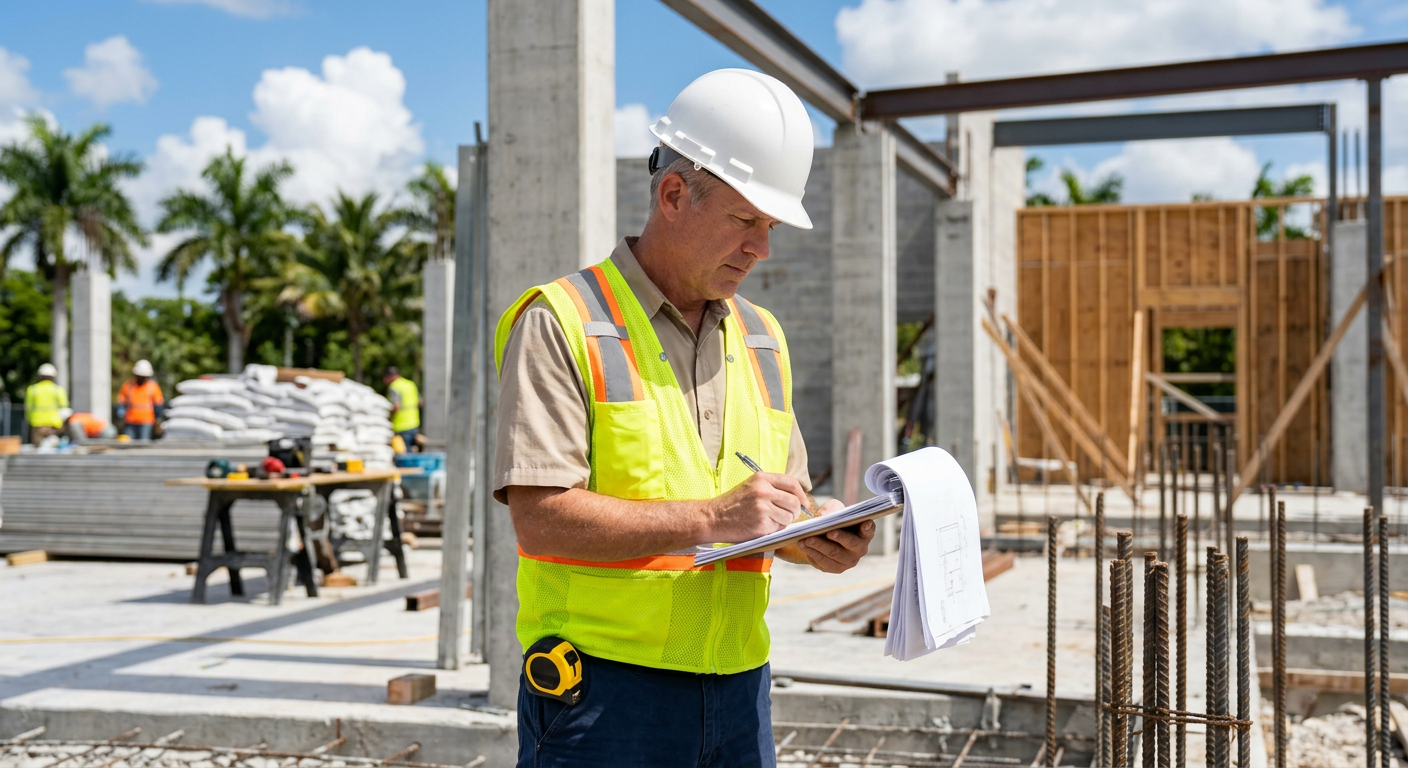
Florida contractors should prepare now for the next major code transition.
The 9th Edition (2026) Florida Building Code takes effect December 31, 2026, replacing the 8th Edition (2023), which has been in effect since December 31, 2023.
The 2026 Florida Building Code update affects contractors, builders, roofing professionals, designers, inspectors, and other construction professionals working on projects governed by Florida’s statewide building requirements.
For contractors, the most important steps are to understand the new code cycle, identify projects that may cross the December 31 effective date, verify the rules that apply to their trade, and make sure continuing education and contractor exam materials are current.
Florida Building Code 9th Edition: At a Glance
- Effective date: December 31, 2026
- New edition: 9th Edition (2026) Florida Building Code
- Current edition: 8th Edition (2023) Florida Building Code
- Model-code foundation: 2024 International Codes and 2023 National Electrical Code
- Model-code changes reviewed: 1,500
- Model-code changes approved: 658
- Public code modifications reviewed: 556
- Public modifications recommended for approval: 345
- Who should prepare: Florida contractors, builders, inspectors, designers, and construction professionals working on projects affected by the Florida Building Code
What Is Changing in the 2026 Florida Building Code?
The 9th Edition Florida Building Code is a broad code-cycle update rather than a single change to one construction requirement.
The Florida Building Commission develops and updates the Florida Building Code on a three-year cycle. For the 9th Edition, the Commission selected the 2024 International Codes and 2023 National Electrical Code as model codes for the update process.
According to the Florida Building Commission, 1,500 model-code changes were reviewed and 658 were approved.
Technical Advisory Committees also reviewed 556 proposed public code modifications and recommended 345 for approval.
Because the update covers a broad range of construction requirements, the effect on an individual contractor depends on the contractor’s license, trade, project type, location, and scope of work.
Potential areas affected by a new Florida Building Code edition can include:
- Construction methods
- Structural requirements
- Roofing requirements
- Building materials and product specifications
- Energy requirements
- Inspection procedures
- Engineering requirements
- Compliance documentation
Florida contractors should review the final provisions that apply to their specific work rather than relying solely on broad summaries of the new edition.
When Does the 9th Edition Florida Building Code Take Effect?
The 9th Edition (2026) Florida Building Code takes effect December 31, 2026.
Until that transition occurs, the 8th Edition (2023) Florida Building Code remains the current statewide edition.
Projects that are being designed, estimated, contracted, or prepared for permitting near the end of 2026 deserve additional attention because the applicable code can affect construction requirements, specifications, engineering, costs, and project timelines.
Contractors should confirm the applicable code edition with the local authority having jurisdiction when a project falls close to the transition date.
What Should Florida Contractors Do Before December 31, 2026?
Florida contractors do not need to wait until the end of 2026 to prepare for the new code.
A practical approach is to review projects, education requirements, and reference materials well before the effective date.
Before December 31, 2026, Florida contractors should:
- Review upcoming projects. Identify projects that may be permitted or begin construction near the code transition.
- Check changes affecting their trade. Focus on provisions that apply directly to the contractor’s license classification and scope of work.
- Confirm permitting requirements. Ask the applicable local authority which code edition will govern projects close to the effective date.
- Review estimating and specifications. Determine whether new requirements could affect materials, engineering, installation methods, or costs.
- Verify continuing education requirements. Make sure contractor CE requirements are satisfied for the applicable renewal cycle.
- Check contractor exam references. Candidates preparing for a Florida contractor exam should verify that their books and study materials match the approved exam references.
Preparing early can reduce the risk of building estimates, schedules, or study plans around outdated requirements.
How Could the 2026 Florida Building Code Affect Roofing Contractors?
Roofing requirements are one area Florida contractors should review carefully during the 9th Edition transition.
Florida’s commonly referenced 25% roof rule is sometimes described too broadly.
Historically, the Florida Existing Building Code included a threshold under which repairing, replacing, or recovering more than 25% of a roof area within a 12-month period could trigger broader code-compliance requirements.
However, Florida law already contains an important exception.
For qualifying existing roofing systems built, repaired, or replaced in accordance with the 2007 Florida Building Code or a later edition, Florida law allows only the portion being repaired, replaced, or recovered to be constructed in accordance with the current code.
As a result, the statement that “more than 25% roof damage automatically requires a full roof replacement” does not accurately describe every Florida roofing project.
Roofing contractors should review the final 9th Edition provisions and the requirements that apply to the specific property, roofing system, project scope, and local jurisdiction.
Contractors interested in entering the roofing trade can also review Gold Coast Schools’ guide to how to get a Florida roofing contractor license.
Which Florida Building Code Applies to a Project Near the Transition?
Projects that fall close to December 31, 2026 may require additional planning.
Contractors should avoid assuming that a project will automatically fall under one edition based only on its anticipated construction date.
Instead, verify the applicable requirements with the authority having jurisdiction.
A useful way to organize an active project pipeline is to divide projects into three groups:
- Projects expected to be permitted well before December 31, 2026
- Projects expected to be permitted after the 9th Edition takes effect
- Projects close enough to the transition that the applicable code should be confirmed before final pricing, engineering, or design decisions are made
Projects in the third category deserve the most attention because a code change could potentially affect cost, specifications, products, engineering, or project schedules.
How Does the Code Change Affect Florida Contractor Continuing Education?
Florida Building Code changes are also relevant to contractors maintaining an active license.
Florida certified contractors generally renew their licenses on August 31 of even-numbered years, while registered contractors generally renew August 31 of odd-numbered years.
Florida contractors generally complete 14 hours of board-approved continuing education during the applicable renewal cycle.
Required continuing education subjects may include:
- Workplace safety
- Workers’ compensation
- Business practices
- Advanced building code
- Laws and rules
Requirements can vary by license classification and individual circumstances.
Contractors should confirm their current requirements through the Florida Construction Industry Licensing Board.
Does the 2026 Code Change Affect Florida Contractor Exams?
A Florida Building Code transition can also matter for candidates preparing for a contractor licensing examination.
Many Florida contractor examinations are open-book, which means candidates need to know how to navigate the approved reference materials efficiently.
Before purchasing books or beginning an extended study plan, candidates should confirm which references are currently approved for the examination they intend to take.
This is particularly important during a code transition.
Studying from an outdated code book may mean practicing with a reference that does not match the materials required for the examination.
Candidates who are still determining which Florida contractor license to pursue can review Gold Coast Schools’ guide to Florida certified contractor requirements.
How Can Florida Contractors Prepare for the New Building Code?
The best preparation strategy is to focus on the requirements most relevant to your own work.
Florida contractors preparing for the 9th Edition should:
- Monitor official Florida Building Commission updates
- Review code changes affecting their license classification
- Identify projects that may cross the December 31, 2026 transition
- Confirm applicable code requirements with local authorities
- Review estimating templates and project specifications where appropriate
- Verify continuing education requirements
- Use current approved references when preparing for licensing examinations
The Florida Building Commission should remain a primary source for official Florida Building Code information.
Prepare for Your Next Step With Gold Coast Schools
Whether you are maintaining an existing Florida contractor license or preparing to earn one, Gold Coast Schools provides education and exam preparation for Florida construction professionals.
For currently licensed contractors, Gold Coast offers Florida contractor continuing education, including 14-hour CILB continuing education options.
Available course formats include:
- Online courses
- Livestream instruction
- Classroom courses
- Correspondence options
For professionals pursuing a Florida contractor license, Gold Coast Schools also offers Florida contractor exam preparation, including courses, reference materials, practice resources, and preparation for multiple contractor license classifications.
Using current education and reference materials can help contractors prepare for licensing requirements while staying informed as Florida’s construction standards change.

Frequently Asked Questions
When does the 9th Edition Florida Building Code take effect?
The 9th Edition (2026) Florida Building Code takes effect December 31, 2026. It replaces the 8th Edition (2023) Florida Building Code.
What is changing in the 2026 Florida Building Code?
The 9th Edition is a broad code-cycle update based on the 2024 International Codes and 2023 National Electrical Code. Changes can affect construction methods, structural requirements, roofing, building products, energy requirements, inspections, and other areas of construction.
Is Florida’s 25% roof rule going away?
Florida’s 25% roof rule is more nuanced than a simple yes-or-no answer. Florida law already provides an exception for certain qualifying roofing systems built, repaired, or replaced in accordance with the 2007 Florida Building Code or a later edition. Contractors should verify the requirements that apply to each specific project.
Which Florida Building Code applies to projects near December 31, 2026?
The applicable code can depend on permitting status, local procedures, and project circumstances. Contractors with projects near the transition should confirm the governing code with the local authority having jurisdiction before making final estimating, design, or scheduling decisions.
What should Florida contractors do before the new code takes effect?
Contractors should review projects that may cross the December 31 transition, study changes affecting their trade, confirm applicable requirements with local authorities, verify continuing education requirements, and make sure contractor exam references are current.

Interested in becoming a Florida real estate agent?
Connect with an enrollment advisor today.
By clicking “Submit”, you authorize Gold Coast Schools (“us”) to deliver, or cause to be delivered, to you at the phone number you provided above with telemarketing, promotional, informational, and transactional calls and/or text messages using an automatic telephone dialing system or prerecorded/artificial voice. Message and data rates may apply. Text message and call frequency varies. You may opt-out of receiving texts at any time by replying “STOP”. You may opt out of receiving calls/texts by contacting us at info@goldcoastschools.com and letting us know you want to opt-out. Reply “HELP” to a text for assistance. Calls and texts may be recorded for quality and training purposes. Your consent is not required to purchase any goods or services from us.
By clicking “Submit”, you also agree to receive commercial, promotional, and transactional emails from us at the email address you provided above You can opt out of receiving future emails at any time using the unsubscribe link in our electronic messages or by contacting us at info@goldcoastschools.com and letting us know you want to opt-out. See our Terms and Conditions and Privacy Policy for more information.
By clicking “Submit”, you authorize Gold Coast Schools (“us”) to deliver, or cause to be delivered, to you at the phone number you provided above with telemarketing, promotional, informational, and transactional calls and/0r text messages using an automatic telephone dialing system or prerecorded/artificial voice. Message and data rates may apply. Text message and call frequency varies. You may opt-out of receiving texts at any time by replying “STOP”. You may opt out of receiving calls/texts by contacting us at info@goldcoastschools.com and letting us know you want to opt-out. Reply “HELP” to a text for assistance. Calls and texts may be recorded for quality and training purposes. Your consent is not required to purchase any goods or services from us.
By clicking “Submit”, you also agree to receive commercial, promotional, and transactional emails from us at the email address you provided above You can opt out of receiving future emails at any time using the unsubscribe link in our electronic messages or by contacting us at info@goldcoastschools.com and letting us know you want to opt-out. See our Terms and Conditions and Privacy Policy for more information.
Need Help?
We're here for you!
Our expert enrollment advisors are available with any questions you might have.
800.732.9140
Hours:
Mon-Thur 8am - 6pm (EST)
Fri 8am - 5pm (EST)
Sat 8am - 12:30pm (EST)